Governance Structure
How the forum is governed.
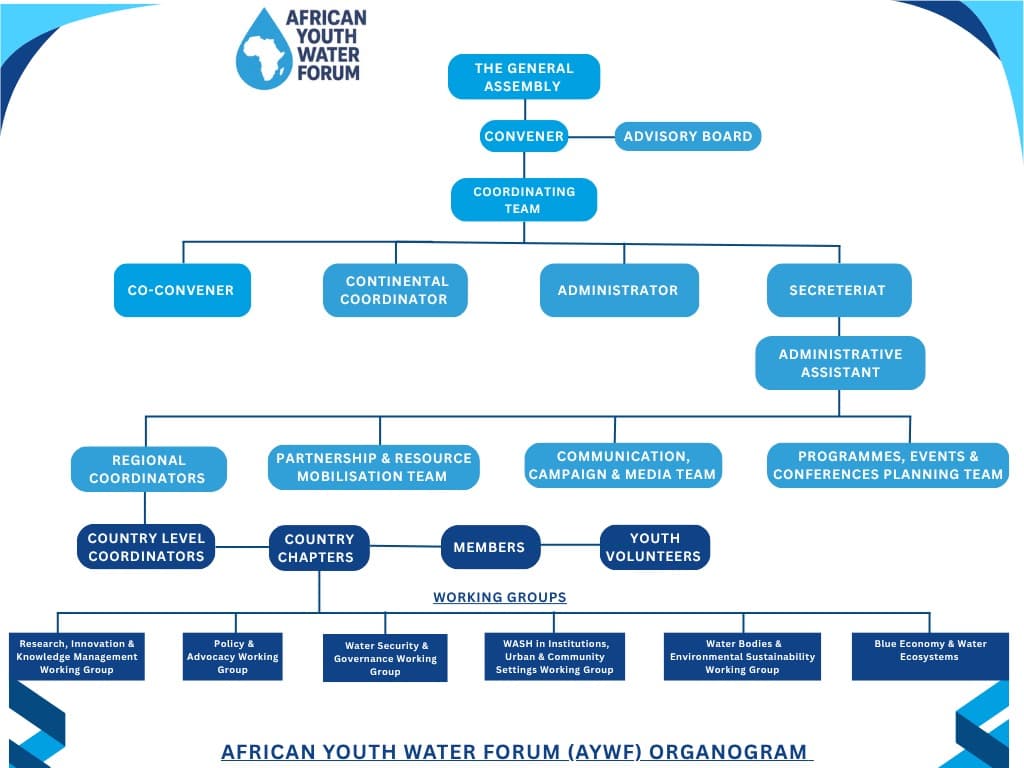
AYWF is built to remain accountable to its membership and mission, with clear roles coordinating strategy, oversight, and policy work across the continent.
A decentralized, participatory governance system.
AYWF operates through a decentralized, participatory, and accountable governance system that promotes effective leadership, regional representation, technical excellence, and meaningful youth participation across Africa. The framework is designed to ensure that decisions are transparent, inclusive, and responsive to the needs of young people while strengthening collaboration with governments, development partners, civil society organizations, academia, and the private sector.
The principal organs
The governance structure comprises the following principal organs, each with clearly defined roles, responsibilities, and reporting relationships:
- 1General Assembly
- 2Advisory Board
- 3Executive Council (Continental Coordinating Team)
- 4Executive Committee
- 5Secretariat
- 6Regional Coordination Offices
- 7Country Chapters
- 8Standing Committees
- 9Technical Working Groups
- 10Members and Youth Volunteers
Roles & responsibilities in detail
1. General Assembly
Status
The General Assembly is the supreme decision-making body of the African Youth Water Forum. It represents the collective membership of the Forum and provides strategic direction for the organization.
Composition
- Individual Members in good standing
- Accredited representatives of Organizational Members
- Development Partners
- Diplomatic Bodies
- Members of the Executive Council
- Regional Coordinators
- Country Coordinators
- Standing Committee Chairpersons
- Technical Working Group Leads
- Delegates from Country Chapters
Observers, partners, and invited guests may participate without voting rights.
Roles & responsibilities
- Determine the overall vision and strategic direction of AYWF.
- Approve the Constitution and amendments.
- Elect members of the Executive Council.
- Approve the Strategic Plan.
- Approve annual budgets and audited financial statements.
- Receive governance, programme, and financial reports.
- Establish or dissolve committees and working groups.
- Ratify major partnerships and institutional policies.
- Consider disciplinary appeals.
- Approve the dissolution of the Forum where necessary.
The General Assembly shall meet once every two years and shall remain the highest authority within AYWF.
2. Advisory Board
Status
The Advisory Board is an independent advisory organ that provides strategic guidance, technical expertise, mentorship, and institutional support to the Forum. The Board shall not be involved in the day-to-day management of AYWF.
Composition
The Advisory Board shall comprise distinguished professionals drawn from:
- Water resources management
- WASH
- Climate and environmental sustainability
- Academia and research
- Governance and public policy
- Civil society
- Development partners
- Private sector
- African Union institutions
- Former AYWF leaders
Roles & responsibilities
- Advise on long-term institutional development.
- Provide technical guidance on strategic issues.
- Support resource mobilization and donor engagement.
- Promote the visibility and credibility of AYWF.
- Mentor emerging youth leaders.
- Review governance performance.
- Support conflict resolution where appropriate.
- Recommend institutional reforms.
- Strengthen partnerships with continental and international institutions.
The Advisory Board reports to the General Assembly through an annual advisory report.
3. Executive Council (Continental Coordinating Team)
Status
The Executive Council is the principal executive and policy implementation organ of AYWF. It is responsible for translating the decisions of the General Assembly into action and overseeing the strategic management of the Forum.
Composition
- Convener
- Co-Convener
- Continental Coordinator
- Administrator
- Secretariat
- Administrative Assistant
- Five Regional Coordinators (North, West, East, Central and Southern Africa)
- Chairperson – Partnership and Resource Mobilisation Committee
- Chairperson – Communications, Campaigns and Media Committee
- Chairperson – Programmes, Events and Conferences Committee
Roles & responsibilities
- Provide strategic leadership for AYWF.
- Implement decisions of the General Assembly.
- Develop and oversee implementation of the Strategic Plan.
- Coordinate the work of Regional Coordinators, Committees, and Technical Working Groups.
- Approve annual work plans and operational priorities.
- Oversee institutional governance and risk management.
- Mobilize resources and approve strategic partnerships.
- Monitor organizational performance.
- Ensure financial accountability and institutional compliance.
- Prepare reports for the General Assembly.
- Promote collaboration among all governance organs.
The Executive Council shall meet quarterly and remain accountable to the General Assembly.
4. Executive Committee
Status
The Executive Committee is the operational management team of AYWF responsible for coordinating the day-to-day administration of the Forum.
Composition
- Convener
- Co-Convener
- Continental Coordinator
- Administrator
- Secretariat
- Administrative Assistant
Roles & responsibilities
- Coordinate daily operations.
- Supervise implementation of programmes.
- Monitor progress on Executive Council decisions.
- Coordinate communication between governance organs.
- Prepare reports and recommendations for the Executive Council.
- Address urgent operational matters between Executive Council meetings.
The Executive Committee shall meet monthly and report to the Executive Council.
Secretariat & operating approach
Young Visionary Leaders Ghana serves as the convening organisation of the Forum and hosts its Secretariat, which provides logistical and secretarial support for the work of the Forum and leads on fundraising to sustain it.
Strategy and approach
- The Forum will not be registered as a legal entity and will not set up its own offices, ensuring that resources mobilised are used directly to provide services to members rather than servicing a secretariat, and keeping it a flexible space for coordinated youth and civil society action. The Secretariat enters into agreements and contracts on behalf of the Forum.
- Except for any compensation relating to implementation of a funded project, the Executive Council and members provide pro bono services to the Forum.
- The Forum focuses its work on broad issues that affect water security and governance in Africa through youth-led initiatives.
Financing
- Fundraising for specific activities or projects, from members, donors, and private sector organisations.
- Self-financing for participation in annual conferences, both continental and international, with general costs covered by institutional partners.
Accountability
- The Executive Council provides regular updates to the Forum's membership, ensuring transparency and responsiveness to emerging challenges and continental-wide priorities.
How it fits together